Dances, night pieces and studies in plain terms
Chopin for first listeners
A plain guide to the kinds of music in a Chopin concert: the polonaise, the nocturne, the étude and the barcarolle, and how to listen to each.
Reserve a seat for Chopin ↗Start with the dances
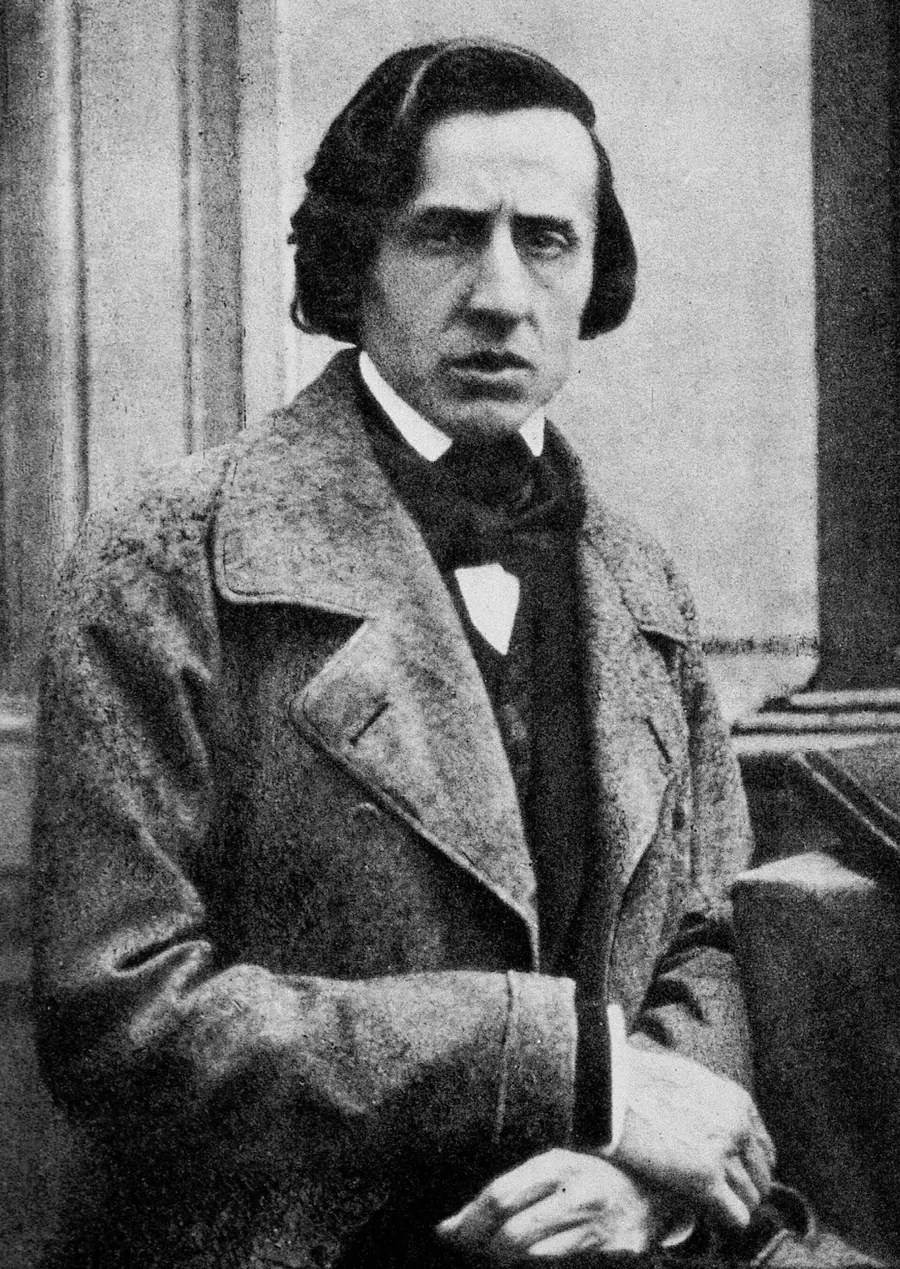
Chopin's polonaises and mazurkas come from Polish dances. The polonaise began as a walking dance, called chodzony in Polish, and the mazurka is a Polish folk dance. Wikipedia notes that Chopin's mazurkas were written for the concert hall rather than the dance hall, and quotes a musicologist who says Chopin put the mazurka on the European musical map. Hear them as dances you could almost count in your feet.
The Military Polonaise
The A major Polonaise, Op. 40 No. 1, is the best-known polonaise to meet first. Chopin composed it in 1838 and dedicated it to Julian Fontana. It is played almost entirely forte or louder, with a steady rhythm under big chords. Arthur Rubinstein called it the symbol of Polish glory, and in 2023 UNESCO listed the polonaise dance as intangible cultural heritage. If it is on your night, you will not miss it.
The night piece
A nocturne is a piece that evokes the night, and Chopin wrote 21 of them. The Irish composer John Field, who gave the form its name for solo piano, is usually called the father of the Romantic nocturne. Chopin's version keeps a singing melody over a gentle, rolling accompaniment. In a candlelit church this is the form that fits the setting best, and the pieces are short enough that you can simply listen. The Nocturne in C-sharp minor named on the programme was published only in 1875, after his death, and Chopin wrote it for his sister Ludwika to practise.
The study that became a concert piece
An étude is a study, and before Chopin it was mostly practice material. Wikipedia says that the romantic études of Chopin and Liszt are fully developed concert pieces. The Revolutionary Étude, Op. 10 No. 12, is a good example: long runs for the left hand under a big melody for the right. A legend ties it to the fall of Warsaw in 1831, but there is no evidence that Chopin had that in mind when he wrote it.
A boat song and a march
The Barcarolle in F-sharp major, Op. 60, borrows the rocking rhythm of a barcarolle, a boat song, and shows Chopin's love of bel canto opera, with double notes that imitate singing. Chopin composed it between autumn 1845 and summer 1846. The Fantaisie in F minor, Op. 49, begins with a solemn marching theme and later turns passionate. Both are longer, more serious pieces than the dances and nocturnes, and both are named on the programme.
How to listen in a candlelit church
Do not try to follow every note. Let the first minute settle, then listen for what returns: a melody that comes back after a contrast is the usual shape of Chopin's pieces. Wikipedia says over 230 of his works survive and that all of them involve the piano, so everything you hear comes from one instrument and one mind. If the pianist speaks before a piece, use the words as a guide to one thing to listen for, and let the rest go.
Titles Chopin never gave
Wikipedia notes that, except for his Funeral March, Chopin never named an instrumental piece beyond its genre and number, so titles such as Revolutionary were invented by others. That is useful for a first listener: you do not have to find a story. Follow the shape of each piece, loud against quiet and fast against slow, and let the candlelit church do the rest. The only name he did give was the Funeral March.
Read next: Chopin and his friends
Frequently asked questions
Do I need to know Chopin before I go?
No. The forms are few: dances, night pieces and studies. This guide is enough preparation.
Which Chopin piece is the best known?
The Revolutionary Étude, the A major Polonaise and the posthumous C-sharp minor nocturne are all on the programme list, though none is promised for a given night.
Did Chopin name his pieces?
Seldom. Wikipedia says that apart from the Funeral March he gave only genre and number, and others invented nicknames.
Sources